
Medicalisation of Mental Health: ‘Ask what has happened to you, instead of what is wrong with you…’
30th September 2022
Written by Oliva Fretwell, Assistant Psychologist.
Eleanor Longden, survivor and founder of the Hearing Voices Network, used this phrase in 2012 which captured the state of the mental health industry. This reflected her own mental health battle, and the immense turmoil, mistreatment, and stigma that she, alongside millions of others, had to endure. After Eleanor Longden was diagnosed with schizophrenia, a 10-year battle followed, both with herself initially, and then against the very people who were supposed to be enabling her recovery; she fought against the voices in her head due to the label of insanity she had been given.
Medicalisation is the process by which normal human behaviour is labelled as a medical condition, typically in the form of a diagnosis (Van Praag, 2000). Whilst the conception of The International Classification of Diseases (ICD, 1893) and Diagnostic Statistical Manual (DSM; APA, 1952) was driven by the need to accurately track and monitor disease (Hirsch et al., 2016), these constructs now provide the basis of most psychiatric assessment, diagnosis and research. However, observers and practitioners such as Thomas Szasz (academic and psychiatrist), argue that aspects of normal behaviour are diagnosed as mental health illness (Szasz, 1974). One example is of attention-deficit hyperactivity disorder (ADHD), where cardinal ‘symptoms’ such as the inability to concentrate or sit still, are often nothing more than elements of typical children’s behaviour.
From here, we begin to unpack inherent dangers of medicalisation and what this means for individuals who are given the label.
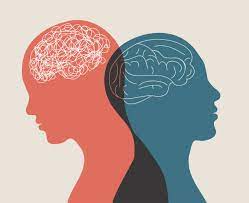
The British Psychological Society’s DCP (division of clinical psychology) position statement in 2013 highlighted how the reliance and dominance of the medical classification of diseases has long been accepted and established within theory and practice. This has subsequently shaped services and service provision. The current classification system, whilst useful for psychiatrists, may not be useful for psychologists and the way they work especially for mental health problems without identified biological aetiologies (Huda, 2020).
Symptoms of schizophrenia include delusions and hallucinations, typically stigmatised as indicators of abnormality and insanity (Penn et al., 1999). A ‘neural diathesis-stress model’ of schizophrenia combines traumatic childhood experience, sadly a common feature in a lot of mental health diagnoses, with a genetic vulnerability (Popovic et al., 2018). Sound treatment practice would require the therapist to support and help the patient explore, understand, and accept their symptoms. Furthermore, the patient would need to be supported to view symptoms as internal experiences and not something that should be rejected or eradicated entirely; in other words, the symptoms need to be ‘reframed’ as sane reactions to insane circumstances.
Addiction is another example of a ‘stigmatised’ mental health diagnosis. Addiction can be misunderstood to be a choice or an organic brain disease (Barnett et al., 2018). Instead, childhood trauma is a common part of many addicts’ presentation; addiction should be viewed as a coping mechanism and an attempt to escape suffering (Maté, 2012).
Traditional medical models used in psychology/psychiatry identify psychological disorder as a ‘fault’ originating within the individuals; typically, these models fail to look beyond or consider broader social or political problems. The media and television can also contribute to the problem. For example, they invariably show the desperation of addicts on the streets but do not show the cause of their desperation (Maté, 2020). In more extreme cases, the effect of addiction might force them into illegal activity, leading to imprisonment; this can create a self-perpetuating cycle – more trauma, alienation and isolation. Social components e.g., poverty, social isolation, limited education, all need to be considered within a framework of addiction – these issues are often obscured as they are viewed as hard to change, however evidence suggests they contribute greatly to poor mental health (Alegría et al., 2018).
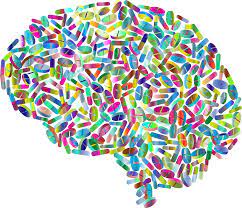
There is also a fundamental danger of using the medical model/approach and applying it to treatment. The prescription of antipsychotic medication can be prioritised over psychological treatment approaches such as cognitive behaviour therapy (CBT). CBT addresses the relationship between thoughts, feelings and how they impact our behaviour. The treatment is predicated on ‘collaborative’ working, resisting an ‘expert’ model and is goal focussed, addressing a range of possible outcome of importance to the patient. Whilst symptom reduction remains a therapeutic objective, it also addresses broader outcomes (Birchwood & Trower, 2006) and can include work on relapse prevention. Antipsychotic medication works by blocking the effect of neurotransmitters in order to dampen aspects of an individual’s functioning (Kapur et al., 2006). However, for many individuals who experience hallucinations, expecting eradication of symptoms as an outcome can be unrealistic and dangerous; individuals may find them comforting and require them to function. As Birchwood et al. (2014) found, it is more important for treatment to help individuals change their relationship and appraisal of the hallucinations, instead of eradicating and resisting them entirely, as medication does. Simply supressing the voice for a number of years only temporarily helps – it may help in the short-term to stabilise someone, but does not eradicate it entirely. Underlying trauma can remain dormant and entrenched. However, in cases where delusions are distressing or dangerous medication may have an important role in managing symptoms, undoubtedly providing temporary respite, reducing distress and overt risk of harm to self and others.
A a group of psychologists made a vast effort to change the dysfunctional perceptions and ideologies of mental health in 2013. This group worked for 5 years to create a new ‘Power-Threat-Meaning’ Framework. This framework was fundamental in changing how mental health was to be viewed. The framework was created to help individuals formulate a narrative about their experiences, to instil hope and practical ways of moving forward. The approach is also consistent with the idea of formulation. Formulation is a collaborative process between the psychologist and client, which includes explaining, understanding and making sense of one’s experiences. The key message of a formulation is that whatever the circumstance or experience, at some level it all makes sense. Formulation can empower and strengthen an individual to understand, ‘deconstruct’ and reflect on their experiences as a means of coping with what has happened to them. Formulation may be used instead of, or alongside a diagnosis, depending on what is best for the individual in terms of acceptance and understanding.
None of the above ideas are new, demonstrating the difficulty changing attitudes and beliefs, and how engrained medicine is within the treatment of psychological disorder. A case in point is a very recent report by University College London. Based upon their systematic review of all available evidence, they concluded that there is no clear evidence for the chemical imbalance theory of depression i.e., low serotonin levels, and therefore no clear evidence for the use of antidepressants to help alleviate symptoms of depression (Moncrieff et al., 2022). The chemical imbalance hypothesis is increasingly viewed as misleading, conflating cause and effect and distracting from other critical causal influences such as the person’s environment (Ahsan, 2022). It reinforces that there is a fundamentally organic cause or genetic/technical ‘aberration’ with implications for the person’s understanding of their condition and sense of responsibility or control (Dalrymple, 2022). If an individuals’ problems are validated as an illness, this could, at best, detract from them seeking to understanding social and psychological causes of their condition, reinforce their reliance on medication and increase passivity. At worst, it could prove ‘blaming’ (contributing to a sense of being defective) and reinforce negative beliefs about their self and future. Increasing people’s understanding of these issues could have significant implications in view of the huge socio-economic impact of depressive disorders.
More progress is still required to make the shift from ‘what is wrong’ i.e., making assumptions about cause and labelling them, to asking someone ‘what has happened to them’; this can be done by considering and acknowledging alternative explanations and perhaps including formulation. Alternatively, viewing mental health diagnoses as a continuum, rather than as a dichotomy, may also help to remove some of the stigma associated with a diagnosis (Schomerus et al., 2016). The inclusion of individuals with lived experiences, ‘experts by experience’, alongside survivor organisations such as Hearing Voices Network, are vital for helping to shape future practices (Sweeney & Taggart, 2018). The unique insight and empathetic stance are unparalleled and act as a life-line for many.
Thank you for taking the time to read this blog. We welcome any thoughts/comments/opinions, so please do get in contact via social media or our website.
Resources/Authors:
Dr Jacqui Dillan, Prof Mary Boyle, Dr Lucy Johnstone, Dr Richard Bentall
Book – The Body Keeps the Score – Bessel van der Kolk
Dr Gabor Maté – https://drgabormate.com; Explanation of addiction https://www.youtube.com/watch?v=ys6TCO_olOc
Book – Trauma & Recovery – Judith Herman
Hearing Voices Network – https://www.hearing-voices.org
DCP Position Statement – https://www.madinamerica.com/wp-content/uploads/2013/05/DCP-Position-Statement-on-Classification.pdf
References:
Ahsan, S., 2022. I’m a psychologist – and I believe we’ve been told devastating lies about mental health. [online] Amp-theguardian-com.cdn.ampproject.org. Available at: <https://amp-theguardian-com.cdn.ampproject.org/c/s/amp.theguardian.com/commentisfree/2022/sep/06/psychologist-devastating-lies-mental-health-problems-politics> [Accessed 15 September 2022].
Alegría, M., NeMoyer, A., Falgàs Bagué, I., Wang, Y., & Alvarez, K. (2018). Social Determinants of Mental Health: Where We Are and Where We Need to Go. Current Psychiatry Reports, 20(11). https://doi.org/10.1007/s11920-018-0969-9
Barnett, A., Hall, W., Fry, C., Dilkes-Frayne, E., & Carter, A. (2017). Drug and alcohol treatment providers’ views about the disease model of addiction and its impact on clinical practice: A systematic review. Drug And Alcohol Review, 37(6), 697-720. https://doi.org/10.1111/dar.12632
Birchwood, M., & Trower, P. (2006). The future of cognitive-behavioural therapy for psychosis: not a quasi-neuroleptic. British Journal of Psychiatry, 188(2), 107-108. https://doi.org/10.1192/bjp.bp.105.014985
Birchwood, M., Michail, M., Meaden, A., Tarrier, N., Lewis, S., & Wykes, T. et al. (2014). Cognitive behaviour therapy to prevent harmful compliance with command hallucinations (COMMAND): a randomised controlled trial. The Lancet Psychiatry, 1(1), 23-33. https://doi.org/10.1016/s2215-0366(14)70247-0
Dalgleish, T., Black, M., Johnston, D., & Bevan, A. (2020). Transdiagnostic approaches to mental health problems: Current status and future directions. Journal of Consulting and Clinical Psychology, 88(3), 179–195. https://doi.org/10.1037/ccp0000482
Dalrymple, T., 2022. How we fell for antidepressants. [online] Spectator.co.uk. Available at: <https://www.spectator.co.uk/article/how-we-fell-for-antidepressants> [Accessed 15 September 2022].
Hirsch JA, Nicola G, McGinty G, Liu RW, Barr RM, Chittle MD, Manchikanti L. ICD-10: History and Context (2016). American Journal of Neuroradiology, 37(4):596-9. https://doi.org/10.3174/ajnr.A4696
Huda, A. (2020). The medical model and its application in mental health. International Review Of Psychiatry, 33(5), 463-470. https://doi.org/10.1080/09540261.2020.1845125
Kapur, S., Agid, O., Mizrahi, R., & Li, M. (2006). How antipsychotics work—From receptors to reality. Neurorx, 3(1), 10-21. https://doi.org/10.1016/j.nurx.2005.12.003
Maté, G. (2012). Addiction: Childhood Trauma, Stress and the Biology of Addiction. Journal Of Restorative Medicine, 1(1), 56-63. https://doi.org/10.14200/jrm.2012.1.1005
Moncrieff, J., Cooper, R., Stockmann, T., Amendola, S., Hengartner, M., & Horowitz, M. (2022). The serotonin theory of depression: a systematic umbrella review of the evidence. Molecular Psychiatry. https://doi.org/10.1038/s41380-022-01661-0
Schomerus, G., Angermeyer, M., Baumeister, S., Stolzenburg, S., Link, B., & Phelan, J. (2016). An online intervention using information on the mental health-mental illness continuum to reduce stigma. European Psychiatry, 32, 21-27. https://doi.org/10.1016/j.eurpsy.2015.11.006
Sweeney, A., & Taggart, D. (2018). (Mis)understanding trauma-informed approaches in mental health. Journal Of Mental Health, 27(5), 383-387. https://doi.org/10.1080/09638237.2018.1520973
Szasz, T.S. (1974). The Myth of Mental Illness: Foundations of a Theory of Personal Conduct. New York: Harper & Row
Van Praag, H. (2000). Nosologomania: A Disorder of Psychiatry. The World Journal Of Biological Psychiatry, 1(3), 151-158. https://doi.org/10.3109/15622970009150584
Penn, D., Kommana, S., Mansfield, M., & Link, B. (1999). Dispelling the Stigma of Schizophrenia: II. The Impact of Information on Dangerousness. Schizophrenia Bulletin, 25(3), 437-446. https://doi.org/10.1093/oxfordjournals.schbul.a033391
Popovic, D., Schmitt, A., Kaurani, L., Senner, F., Papiol, S., & Malchow, B. et al. (2019). Childhood Trauma in Schizophrenia: Current Findings and Research Perspectives. Frontiers In Neuroscience, 13. https://doi.org/10.3389/fnins.2019.00274
Power-Threat-Meaning Framework – https://www.bps.org.uk/sites/bps.org.uk/files/Policy%20-%20Files/PTM%20Main.pdf