
World Mental Health Day 2019 : Suicide Prevention- It Starts With All Of Us.
10th October 2019
Today is World Mental Health Day; an awareness day that is one of the most important days in my calendar. This year, the theme is ‘Suicide Prevention’. Anyone who follows our blogs (and has read any of mine) will know that suicide is another issue that is very close to my heart, and that is why here at Psychology Chartered we are keen to play our part in WMHD2019.
In simple terms (which is an ironic phrase as it is such a complex issue), suicide is defined as taking one’s own life. The word ‘suicide’ comes from the Latin word Suicidium, which literally translates to mean: “to kill oneself”. Cross-culturally, suicide stirs many emotions, but one thing that is generally agreed upon is that it shouldn’t be happening.
According to the World Health Organisation (2019), suicide is in the top 10 causes of death worldwide and statistics show that rates of ‘completed suicide’ are higher in men than they are in women (where men are four times more likely to take their own lives). This being said, the rates for ‘non-fatal attempted suicide’ show women as being four times more likely to attempt to take their own lives than men (this is also more common in young adults/adolescents). For individuals between the ages of 15 years old and 34 years old in the US, suicide was the second leading cause of death in 2017 which amounted to a death every 11 minutes.
It is clear from those few statistics that monumental change is needed and it is awareness days like these that can instigate that change.
Someone who is feeling suicidal might not always ask for help, but that does not mean that help is not wanted. They may ask for help, but it might be indirectly and therefore it could be misunderstood. Suicide prevention starts with recognising and understanding the warning signs and then taking them seriously.
Suicide warning signs can include:
Seeking out lethal means– Seeking access to medication, guns, knives.
Lack of hope for the future– Feelings of helplessness (like being trapped) or feeling hopeless such as the belief that things will never change “there is no way out”.
Obsession with death – Unusual attention on death, dying, or extreme violence. Writing poems, drawing pictures or stories about death.
Self-loathing and self-hatred – Feelings which can include: worthlessness, guilt, shame and self-hatred. Feeling like a burden “You’d all be better off without me”.
Self-destructive behaviour – Increased alcohol/drug use, reckless driving, unsafe sex. Partaking in unnecessary risk behaviour.
Getting affairs in order – Making out a will. Giving away their favourite possessions. Making arrangements for loved ones.
Saying goodbye – Out of the ordinary, unusual or unexpected messages or visits to family/ friends. Saying goodbye to people as if they won’t be seen again.
Talking about suicide – Any mention of dying, taking their own life or self-harm, such as “I wish I hadn’t been born,” “If I see you again…”
Withdrawing from others –Increase in social isolation. Desire to be left alone, not going out. Decreased interaction with friends/ family, social clubs, not going to work.
A sudden sense of calm – A sudden sense of calm and/or happiness after being extremely depressed and reserved can mean that the person has made a decision to attempt suicide and needs help now.
Please note that this is not an exhaustive list and suicide will not look the same in everyone. You know your friends; you know your family -just talk. Get them to their GP. Speak to a crisis helpline.
If you think someone you know is considering suicide, you might be afraid to mention it to them directly, or even bring up the subject- but take a minute to imagine how frightened they must be feeling. They are hurting, and the only think they want is for that pain to go away, by simply talking to your friends, loved ones and colleagues about how they are feeling and taking the time to listen- you could be already easing that pain which will be making a world of difference.
Mental health affects us all, even if it’s not you personally suffering. It could be a friend, partner, colleague or relative that is struggling on the inside; don’t let them do it alone.
Let’s all remember to be decent, kind and compassionate to each other, uplift your friends, your family and colleagues. Send them an awful photo of you to make them laugh, send them a meme or a funny dog video (if that’s your thing) and remember that in this life, you are not alone.
We all have dark days and that is ok- but sharing that problem will make everything seem a less grey and a lot brighter.
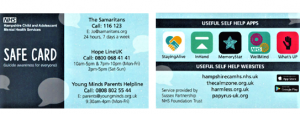
Samaritans:
Tel: 116 123 (24 hour, free to call)
Email: Jo@samaritans.org
Mind Infoline:
Tel: 0300 123 3393 (9am-6pm Mon-Fri)
Text: 86463
Rethink Mental Illness Advice Line:
Tel: 0300 5000 927 (9:30-4pm Mon-Fri)